At
Urmul Seemant Samiti, we firmly believe that the most enduring changes come from within the community. By fostering community-driven initiatives, we aim to empower farmers across Rajasthan to become the architects of their own sustainable futures. In collaboration with the
Farm India Foundation, our mission is clear: to provide rural farmers with the tools, knowledge, and support they need to thrive in a sustainable, eco-friendly way.
Mission Biogas: A Movement for Sustainability
Mission Biogas is not merely a technological intervention; it represents a profound shift toward a cleaner, greener, and more resilient lifestyle. This initiative seeks to address two critical concerns in rural Rajasthan: soil health and clean energy. By introducing biogas technology, we offer farmers a sustainable solution that enhances the fertility of their lands and provides a renewable source of clean fuel for their households.
Empowering Farmers through Accessible Technology
At the core of
Mission Biogas is our commitment to making biogas technology accessible and affordable for every farmer. Our approach is community-focused, ensuring that farmers play an active role in the setup and use of biogas units. With the right training, tools, and support, each farmer becomes a vital part of a larger movement, transforming their land and their way of life.
Through this initiative, we help farmers transition from traditional, unsustainable methods to practices that enrich the soil, reduce dependency on chemical fertilizers, and cut down harmful carbon emissions. The adoption of biogas not only provides households with clean cooking fuel but also generates enriched slurry, a powerful biofertilizer that rejuvenates the desert soil.
A Movement for Lasting Change
Mission Biogas is a movement—one that transforms lives, households, and communities. By using biogas technology, farmers are not just adopting a modern tool; they are becoming changemakers, leading the way in building a more resilient and empowered rural community. This movement is rooted in the belief that every farmer has the potential to contribute to a more sustainable future, and we are here to provide them with the support they need to achieve that.
Impacting Lives and Lands
Since its inception,
Mission Biogas has already made a significant impact across Rajasthan:
- Empowered over 1000 families by providing them with biogas units, allowing them to generate clean fuel at home and reduce their reliance on conventional energy sources.
- Reduced carbon emissions by 10,000 tons per year, contributing to the global fight against climate change.
- In Transition more than 10,000 bighas of desert land into chemical-free, sustainable farming through the use of enriched slurry from biogas digesters.
- Working across 15 districts in Rajasthan, with a goal to expand even further in the coming years, our initiative is reshaping the future of agriculture and clean energy in the region.
A Vision for the Future
Looking ahead, our vision for
Mission Biogas is to scale this movement to reach even more farmers, families, and communities. Our aim is to empower
5000 farmers by 2027, helping them transition to sustainable, chemical-free farming practices. Through this, we aspire to create a ripple effect, where the use of clean, renewable energy becomes the norm rather than the exception, and the desert soil is restored to its natural fertility.
Together with the farmers of Rajasthan,
Urmul Seemant Samiti and the
Farm India Foundation are committed to building a greener, more resilient future—one where every farmer is a changemaker, and every household is a beacon of sustainability. This is the power of
Mission Biogas: transforming lives, empowering communities, and nurturing the land for generations to come.





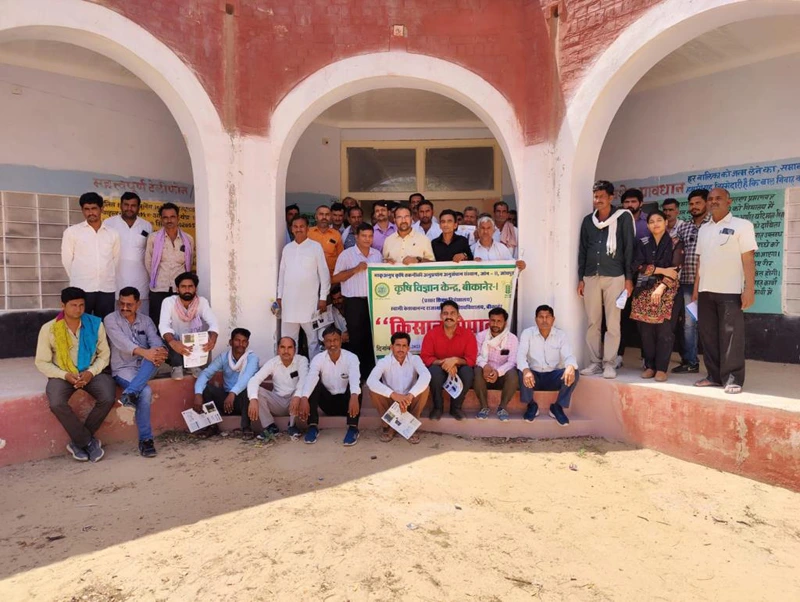 URMUL Seemant Samiti co-hosted the Kisan Chaupal in collaboration with the Kisan Vigyan Kendra of Swami Keshvanand University and Rajasthan Agricultural University organised an event at URMUL Seemant Samiti in Bajju, Rajasthan on May 10th. The event aimed to provide farmers with valuable insights and information, focusing on the benefits of the Din Dayal model of biogas as a sustainable energy source. Expert speakers discussed renewable energy, cost savings, organic fertiliser production, and waste management. The event also highlighted the advantages of rainwater harvesting and water management techniques, helping farmers conserve water, cope with droughts, and improve crop yields.
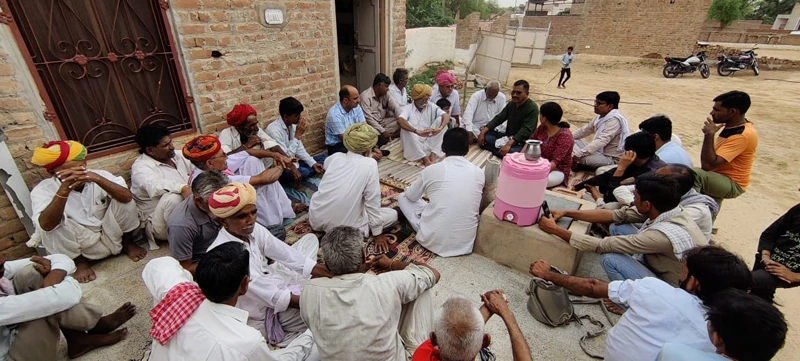
 We have been actively organising Kisan Baithak in the field, and their impact on desert communities cannot be overstated. These gatherings provide a vital platform for farmers and community members to come together and discuss crucial topics related to agriculture, specifically tailored to the unique challenges faced by desert communities. By addressing issues such as agriculture, milk production, cattle feed, manure management, and increasing green fodder production, Kisan Baithak offers valuable insights and practical knowledge to farmers in desert regions.
These discussions focus on sustainable farming practices that are adapted to arid environments, maximising yield while conserving water and minimising the impact on the delicate desert ecosystem.
We have been actively organising Kisan Baithak in the field, and their impact on desert communities cannot be overstated. These gatherings provide a vital platform for farmers and community members to come together and discuss crucial topics related to agriculture, specifically tailored to the unique challenges faced by desert communities. By addressing issues such as agriculture, milk production, cattle feed, manure management, and increasing green fodder production, Kisan Baithak offers valuable insights and practical knowledge to farmers in desert regions.
These discussions focus on sustainable farming practices that are adapted to arid environments, maximising yield while conserving water and minimising the impact on the delicate desert ecosystem.

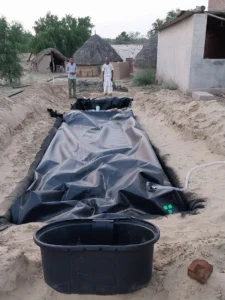 An innovative collaboration has been forged with visionary entrepreneur Mr. Sonu Kothari, founder of Farm India Foundation, along with Urmul Seemant Samiti and dedicated community members which operates on a unique principle of empowerment and ownership.
Sonu Kothari (HNI Businessman and founder of Farm India Foundation ) offers interest-free loans, with a generous
An innovative collaboration has been forged with visionary entrepreneur Mr. Sonu Kothari, founder of Farm India Foundation, along with Urmul Seemant Samiti and dedicated community members which operates on a unique principle of empowerment and ownership.
Sonu Kothari (HNI Businessman and founder of Farm India Foundation ) offers interest-free loans, with a generous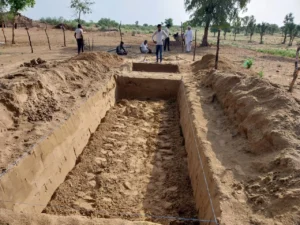 50% subsidy, to support the installation of biogas plants for the beneficiaries. In turn, the beneficiaries contribute the remaining amount while Urmul Seemant Samiti plays a vital role in providing human resources, identifying beneficiaries, and executing strategies on the ground.
With the promising outcomes of an initial pilot project featuring five bio gas plants, the initiative is now being scaled up to benefit 50 additional beneficiaries. This expansion signifies a powerful step towards sustainability and ensures a lasting impact on the communities involved.
50% subsidy, to support the installation of biogas plants for the beneficiaries. In turn, the beneficiaries contribute the remaining amount while Urmul Seemant Samiti plays a vital role in providing human resources, identifying beneficiaries, and executing strategies on the ground.
With the promising outcomes of an initial pilot project featuring five bio gas plants, the initiative is now being scaled up to benefit 50 additional beneficiaries. This expansion signifies a powerful step towards sustainability and ensures a lasting impact on the communities involved.
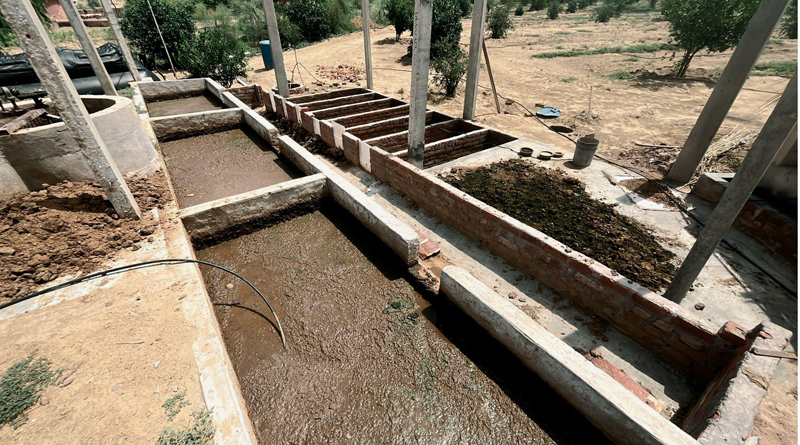 Currently, another pilot project is underway in collaboration with Sonu Kothari (HNI Businessman and founder of Farm India Foundation ) with Urmul Seemant Samiti.
This project aims to assess the performance of a different biogas model called "Home Bio."
Additionally, to separate liquid and solid particles from biogas slurry and add value to these components for agricultural purposes and taking the separated liquid and blending it with jivaamrit, undergoing aerobic digestion to enhance its value. Simultaneously, the separated solid is utilised to produce vermicompost.
To further augment the properties of vermicompost, we are incorporating hydrogel into the mix. Hydrogel is a biodegradable polymer known for its remarkable ability to retain moisture. It is derived from orange peel and serves as an effective solution to overcome water stress in agricultural fields.
By blending hydrogel with vermicompost, we aim to enhance its water holding capacity and moisture retention capabilities. This combination ensures that the water is released to plants when needed, supporting their growth and resilience even in challenging conditions.
Spearheading this experiment is Tony, our dedicated desert fellow, who is diligently developing this innovative model.
This ongoing pilot project signifies commitment for continuous improvement and exploration of more sustainable biogas solutions. By harnessing the potential of Home Bio and incorporating advanced techniques like slurry separation and hydrogel addition, we strive to optimise the efficiency and environmental impact of our bio gas initiatives.
Currently, another pilot project is underway in collaboration with Sonu Kothari (HNI Businessman and founder of Farm India Foundation ) with Urmul Seemant Samiti.
This project aims to assess the performance of a different biogas model called "Home Bio."
Additionally, to separate liquid and solid particles from biogas slurry and add value to these components for agricultural purposes and taking the separated liquid and blending it with jivaamrit, undergoing aerobic digestion to enhance its value. Simultaneously, the separated solid is utilised to produce vermicompost.
To further augment the properties of vermicompost, we are incorporating hydrogel into the mix. Hydrogel is a biodegradable polymer known for its remarkable ability to retain moisture. It is derived from orange peel and serves as an effective solution to overcome water stress in agricultural fields.
By blending hydrogel with vermicompost, we aim to enhance its water holding capacity and moisture retention capabilities. This combination ensures that the water is released to plants when needed, supporting their growth and resilience even in challenging conditions.
Spearheading this experiment is Tony, our dedicated desert fellow, who is diligently developing this innovative model.
This ongoing pilot project signifies commitment for continuous improvement and exploration of more sustainable biogas solutions. By harnessing the potential of Home Bio and incorporating advanced techniques like slurry separation and hydrogel addition, we strive to optimise the efficiency and environmental impact of our bio gas initiatives.